Techno-Stress Inhabits
Techno-Stress Inhabits
Techno-Stress Inhabits investigates the entanglement between the human psychological state and technology, a relationship both intimate and unsettling.
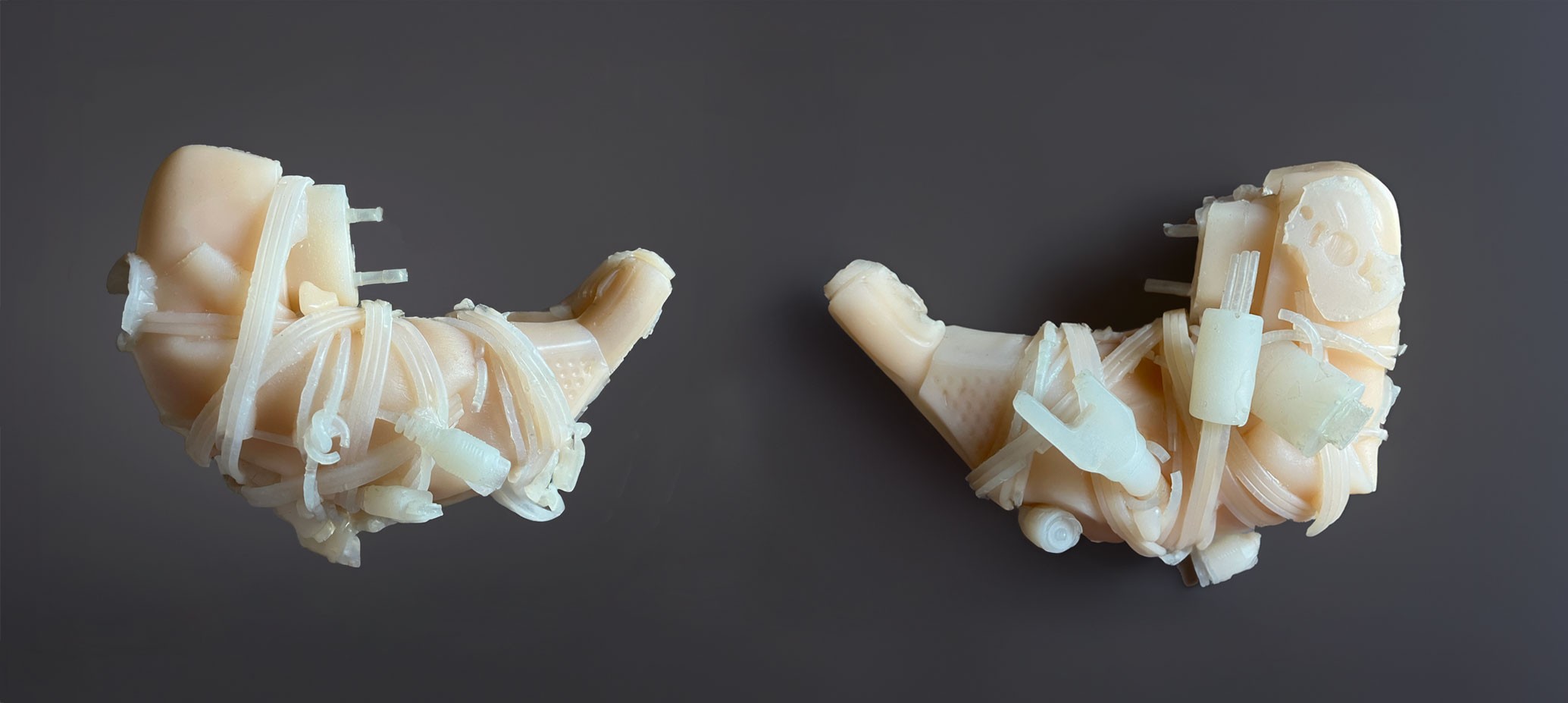
Stomach (2016). Silicone sculpture, 18cm x 12cm
Overview
The term technostress was coined by Craig Brod (1984) to describe “a modern disease of adaptation caused by an inability to cope with the new computer technologies in a healthy manner.” Later studies extended the concept to include the strain of information overload and the collapsing boundary between organic and artificial life (Sankar and Natale 1990; Shu, Tu and Wang 2011). Sherry Turkle (2012) argues that digital devices reshape relationships and inner worlds, producing new forms of isolation amidst constant interaction.
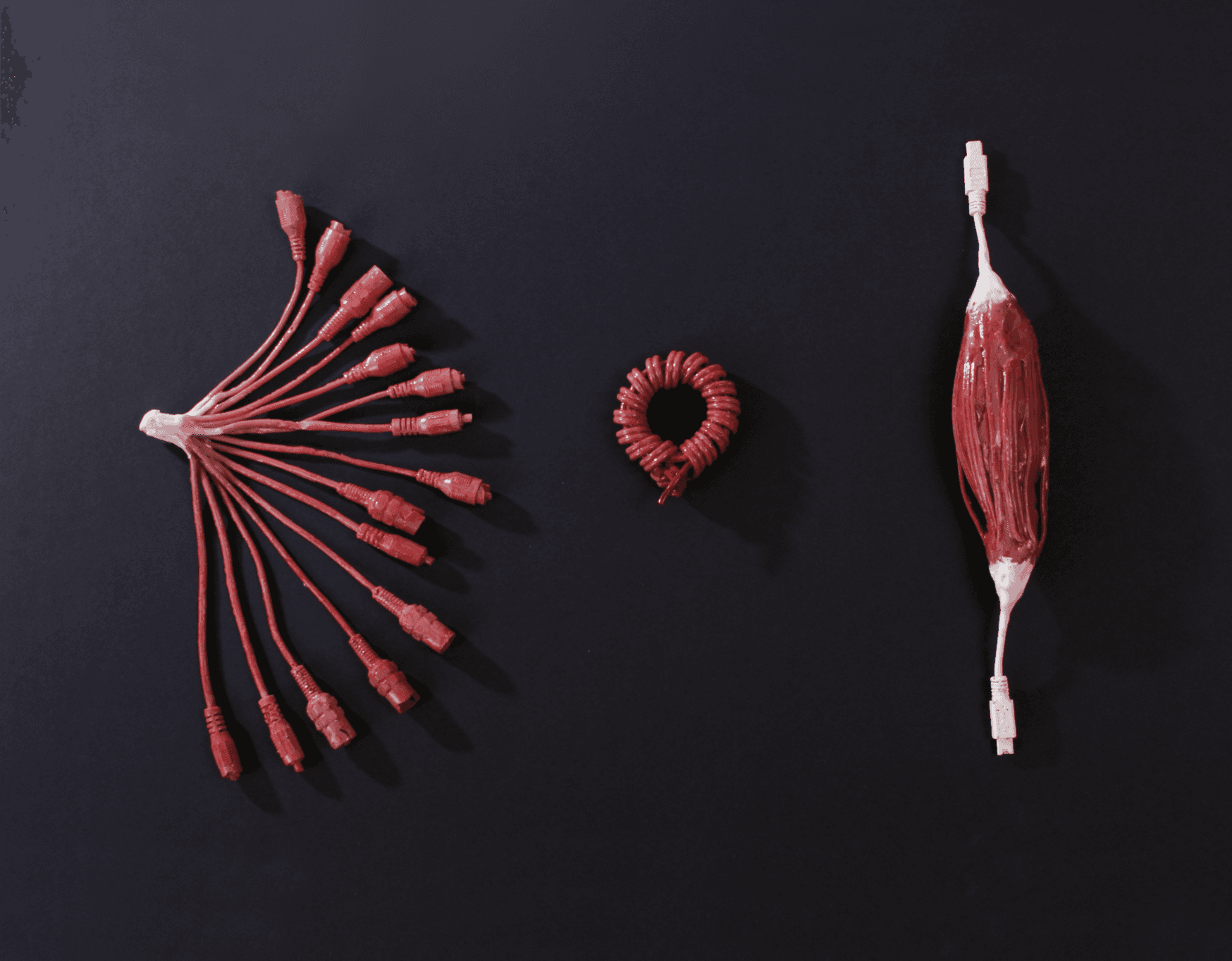
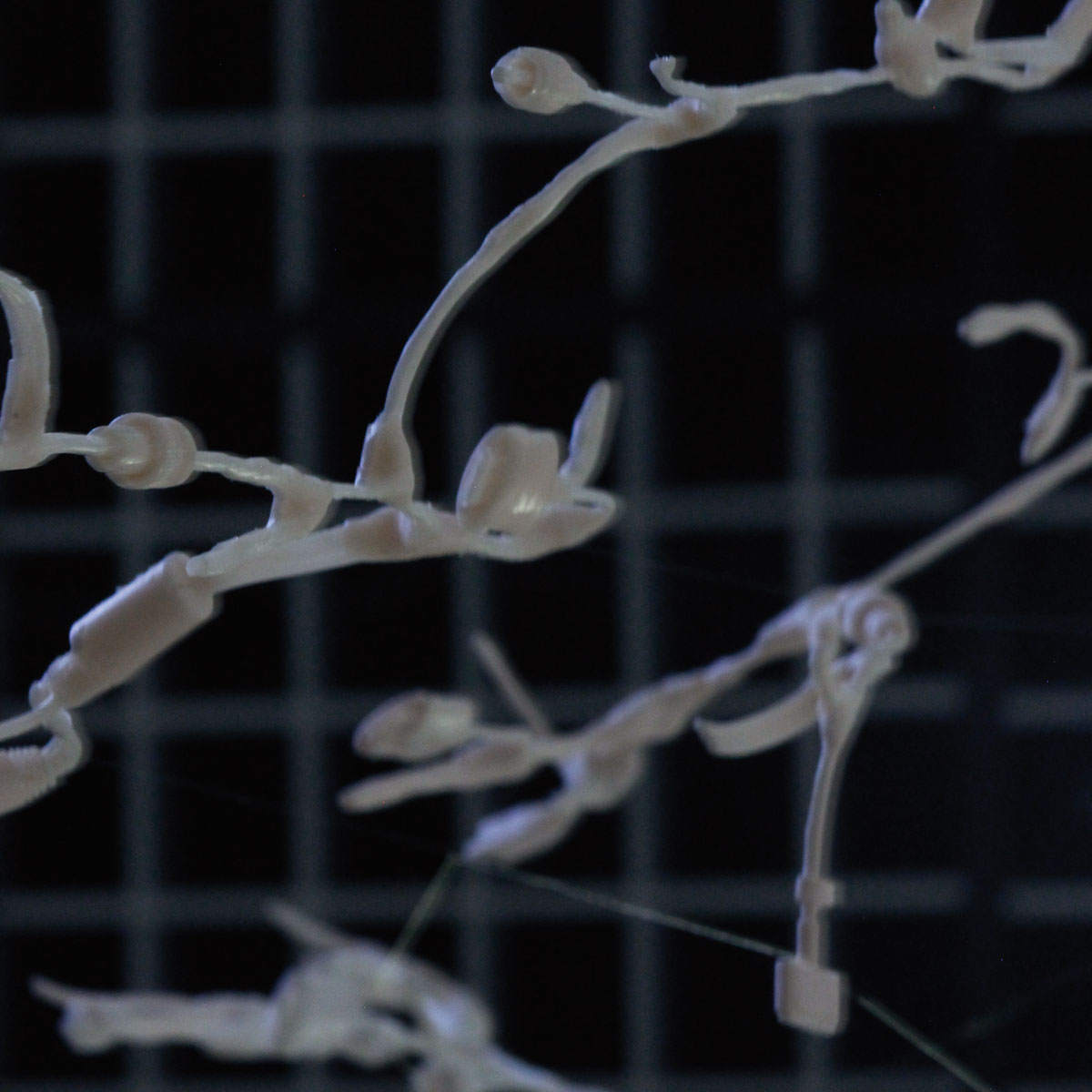
Techno-Stress Inhabits (2016) materialised these pressures through life-size organ-like sculptures constructed from cords, computer parts, and silicone casts of skin. Mimicking the stomach, ear, throat, eye, the works externalised invisible psychological states: instinct reshaped as dependency, speech mediated through devices, sight strained by screens. In this way, sculptural metaphor made visible the hidden psychological costs of technological life.
The term technostress was coined by Craig Brod (1984) to describe “a modern disease of adaptation caused by an inability to cope with the new computer technologies in a healthy manner.” Later studies extended the concept to include the strain of information overload and the collapsing boundary between organic and artificial life (Sankar and Natale 1990; Shu, Tu and Wang 2011). Sherry Turkle (2012) argues that digital devices reshape relationships and inner worlds, producing new forms of isolation amidst constant interaction.
Techno-Stress Inhabits (2016) materialised these pressures through life-size organ-like sculptures constructed from cords, computer parts, and silicone casts of skin. Mimicking the stomach, ear, throat, eye, the works externalised invisible psychological states: instinct reshaped as dependency, speech mediated through devices, sight strained by screens. In this way, sculptural metaphor made visible the hidden psychological costs of technological life.
The term technostress was coined by Craig Brod (1984) to describe “a modern disease of adaptation caused by an inability to cope with the new computer technologies in a healthy manner.” Later studies extended the concept to include the strain of information overload and the collapsing boundary between organic and artificial life (Sankar and Natale 1990; Shu, Tu and Wang 2011). Sherry Turkle (2012) argues that digital devices reshape relationships and inner worlds, producing new forms of isolation amidst constant interaction.
Techno-Stress Inhabits (2016) materialised these pressures through life-size organ-like sculptures constructed from cords, computer parts, and silicone casts of skin. Mimicking the stomach, ear, throat, eye, the works externalised invisible psychological states: instinct reshaped as dependency, speech mediated through devices, sight strained by screens. In this way, sculptural metaphor made visible the hidden psychological costs of technological life.
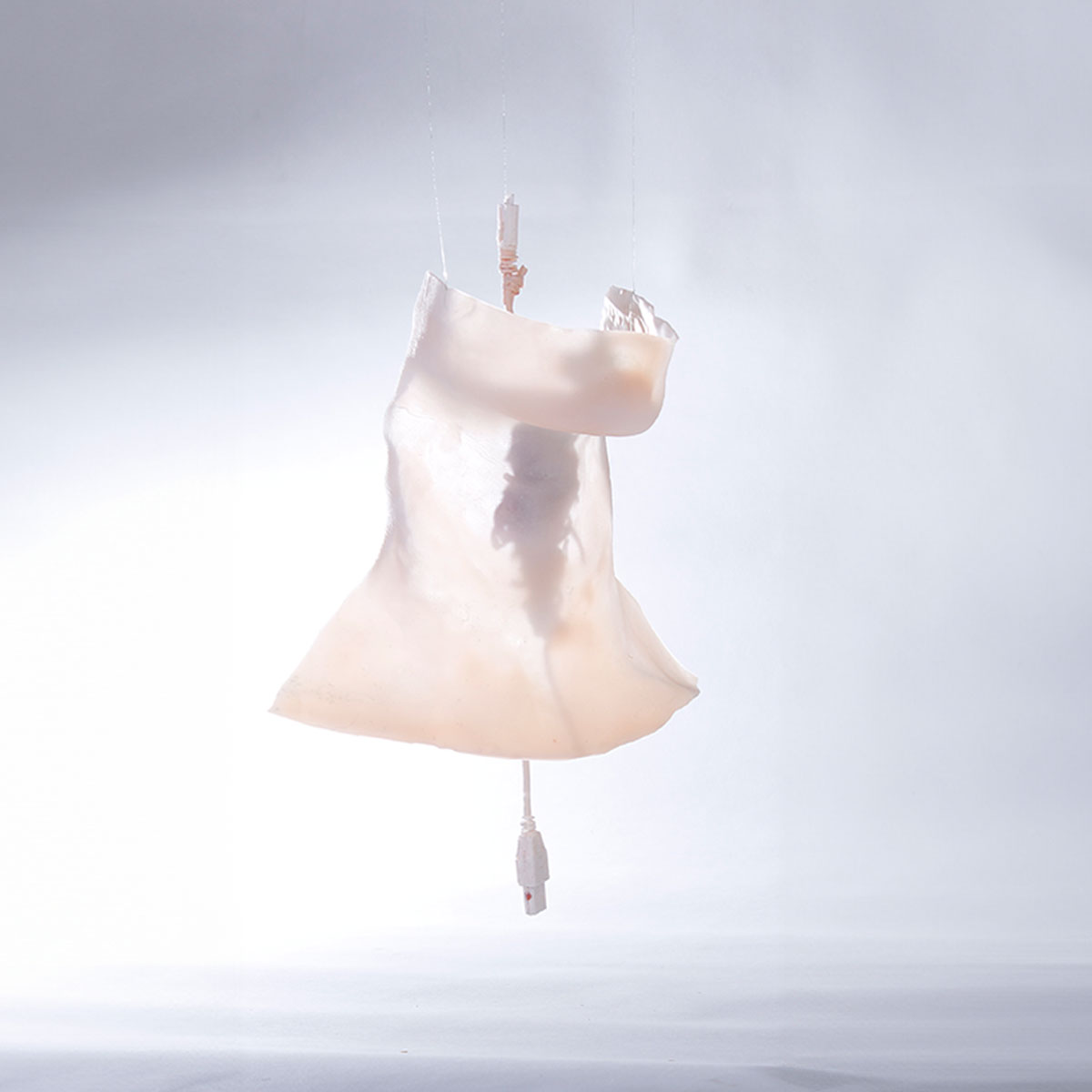
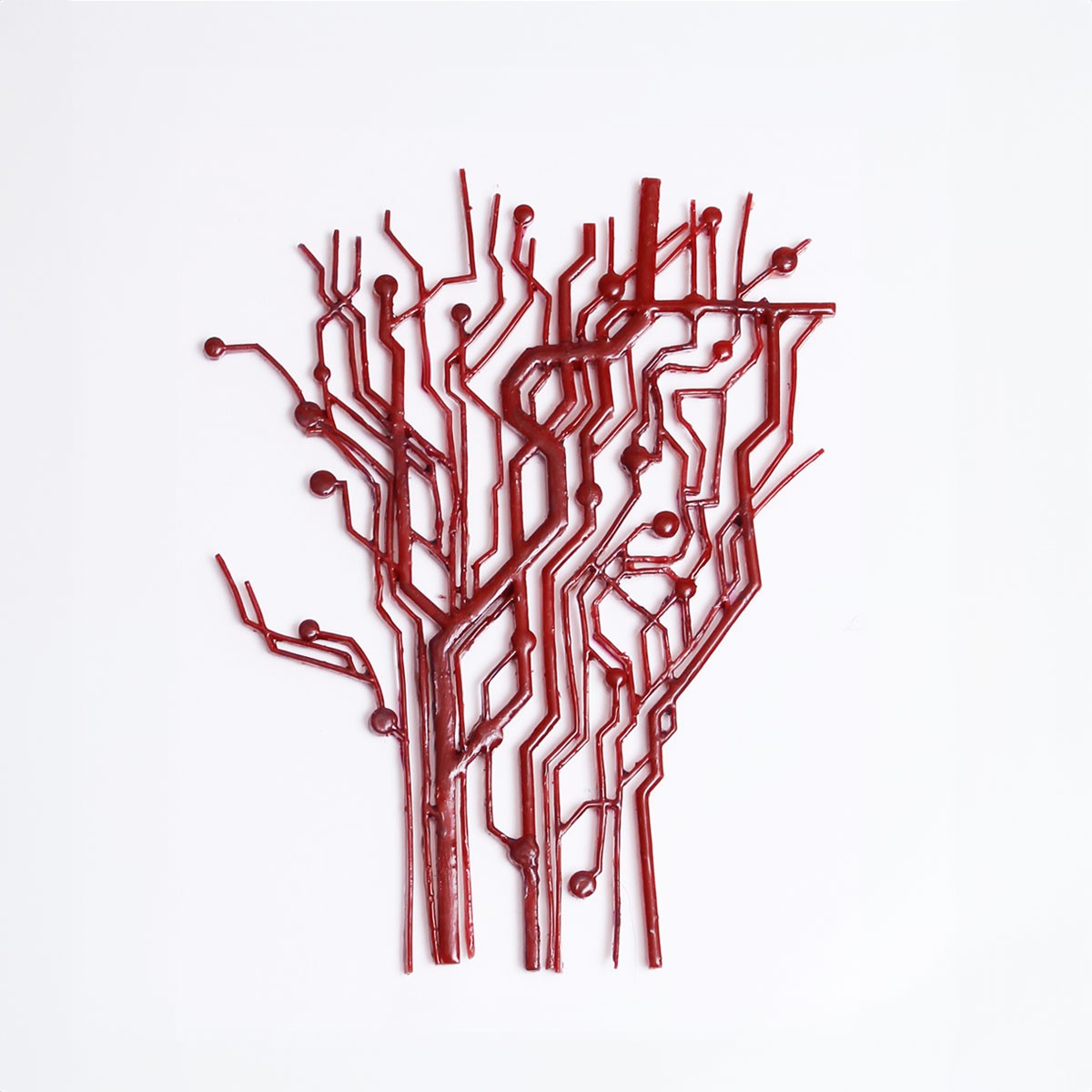
Throat (2016). Silicone sculpture, life-size